Dental Hygiene
The University of Tennessee Health Science Center, offers a Bachelor of Science Degree in Dental Hygiene. This program is fully accredited by the American Dental Association's Commission on Dental Accreditation.
The UT dental hygiene program prepares students through didactic, laboratory, and clinical experiences to work as licensed dental hygienists.
The UTHSC dental hygiene program is a 2 + 2 program:
- 2 years of prerequisites
- 2 years at the UT Health Science Center in Memphis*
*During the second year of the dental hygiene program, students are required to participate in at least one week of a clinical rotation at a UTHSC facility in Union City. Housing accommodations are provided as part of the rotation.
The patients treated by dental hygiene students in the dental hygiene clinics are usually registered patients of the College of Dentistry who are receiving limited or comprehensive dental care through the undergraduate and graduate dental education programs. Most of our patients are recruited from the city of Memphis and the surrounding tri-state area, which has a population of well over one million.
The program maintains the College of Dentistry’s primary patient recall system and provides regular ongoing preventative maintenance care in the dental hygiene clinic to a patient base of over 2,700 individuals. In addition to the dental hygiene clinic, students have scheduled clinical rotations to provide preventative services to patients seen in dental specialty clinics. Approximately 60% of all student dental hygiene clinical experiences are provided in UTHSC clinics.
The Dental Hygiene Program utilizes a competency-based curriculum that requires students to participate in supervised educational experiences throughout the program. To develop the knowledge, psychomotor skills, clinical judgment, and professional competencies necessary for the safe delivery of patient care, students are expected to serve as both student clinicians and student partners during designated laboratory, preclinical, and clinical learning activities.
Educational experiences may include, but are not limited to, medical and dental history review, extraoral and intraoral examinations, periodontal assessments and charting, dental charting, oral prophylaxis, periodontal instrumentation, coronal polishing, fluoride application, pit and fissure sealant placement, local anesthesia administration, radiographic procedures (in accordance with applicable regulations), and other reversible procedures required to achieve program competencies. Throughout the curriculum, students may be required to both perform and receive these procedures as part of supervised educational activities designed to develop and evaluate clinical competence.
Students will participate in designated educational activities only after receiving the appropriate didactic instruction and under the direct supervision of qualified faculty. All educational experiences are conducted in accordance with current infection prevention standards, institutional policies, applicable state and federal regulations, and accepted standards of care to promote a safe learning environment.
Participation in these supervised educational experiences is an essential requirement of the Dental Hygiene Program. By enrolling in the program, students acknowledge that they are expected to participate as both providers and recipients of designated educational procedures, as required by the curriculum, to support the development and assessment of clinical competency.
Before participating in designated educational procedures as a student partner, students will receive instruction regarding the purpose of the activity, expected learning outcomes, associated risks and benefits, and applicable safety measures. Students will be required to review and sign an informed consent acknowledging their understanding of the procedure and their agreement to participate in these educational experiences as part of the program's competency-based curriculum.
The University of Tennessee Health Sciences requires all enrolled students to comply with applicable university immunization requirements. Detailed information regarding these requirements is available on the UTHSC Admissions Immunization webpage: UTHSC Student Immunization Requirements.
The Dental Hygiene Program includes required clinical education experiences at a variety of affiliated healthcare facilities and community-based clinical sites. These clinical affiliates establish their own health, safety, and immunization requirements for students participating in clinical experiences. Some clinical sites may require vaccinations or other health-related documentation beyond UTHSC requirements and may not accept immunization exemptions.
Students are responsible for meeting both UTHSC and clinical site requirements. Because the Dental Hygiene Program cannot modify the policies of affiliated clinical sites, the program cannot guarantee placement at an alternate clinical site if a student is unable to meet a site's requirements. Failure to satisfy the health, immunization, or other participation requirements of required clinical sites may prevent completion of program competencies, delay academic progression, or affect a student's ability to meet graduation requirements.
The dental hygiene program will ensure graduates are able to provide appropriate planned education services through organized community efforts to promote health and disease.
The dental hygiene program will produce professional oral healthcare providers who competently deliver preventive, therapeutic, and educational oral health services in accordance with the ADHA Code of Ethics.
The dental hygiene program will provide graduates with the knowledge, values, and skills to use evidence-based decision-making to provide comprehensive oral healthcare that will promote and achieve oral health.
The dental hygiene program will inspire graduates to enhance their practice of dental hygiene through professional activities and continuing education.
The campus is part of the largest health science center in the Mid-South, providing great potential for access to a variety of population groups. Formal agreements have been reached between the university and several local clinics for student clinical rotations outside the program’s primary on-campus teaching clinic. Specific learning objectives and experiences have been identified for such rotations.
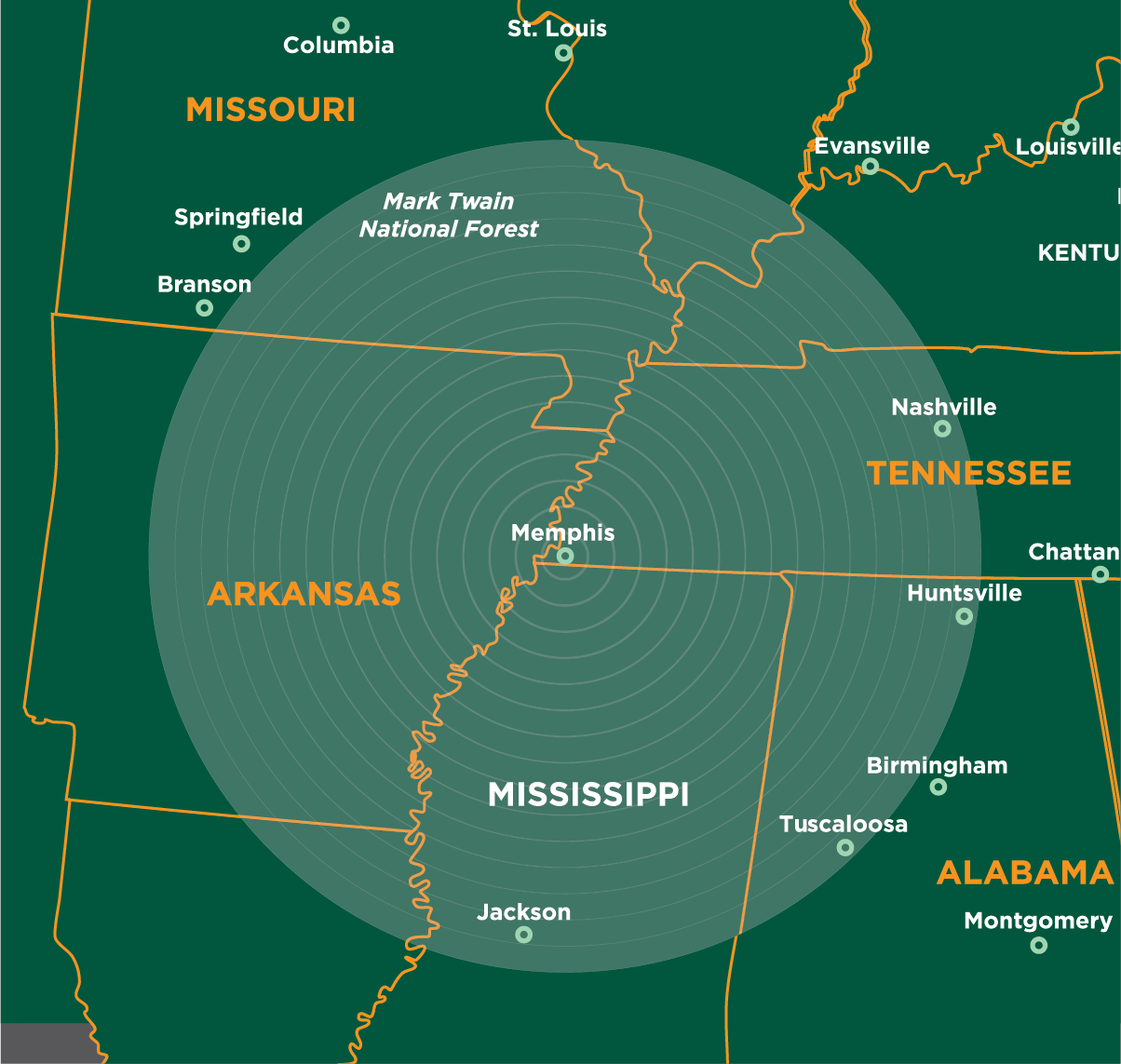
250-Mile Radius Map